





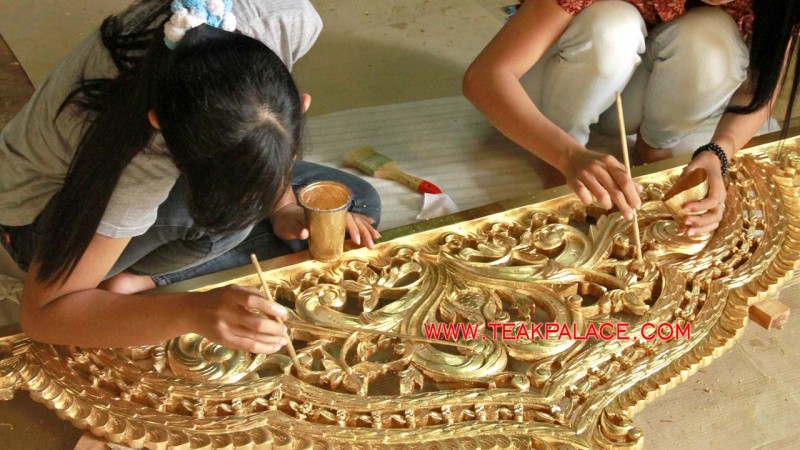
Jepara has long been known as a carving city, especially Teak carving furniture that is best known throughout Indonesia and the world. But how is the history of Jepara carving art which until now has become a cultural heritage of the past?
Let's take the source from Wikipedia about the history of Jepara carving.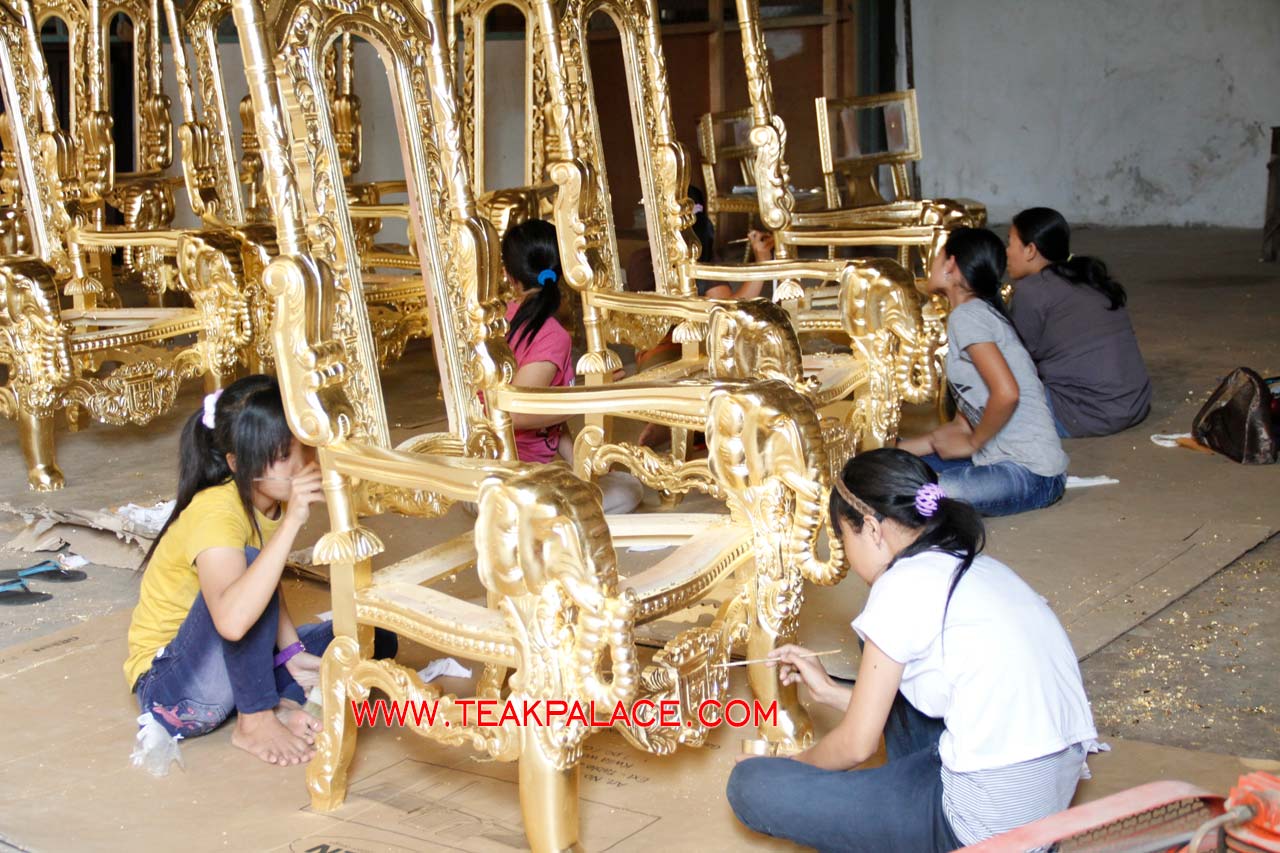
Jepara Carving
Jepara carving or Jepara carving is a typical carving that comes from Jepara. Jepara, known as the Carving City, has now become the World Carving City. After enhancing Jepara's image of "The World Carving Center", because Jepara carving products are already very well-known and there are many enthusiasts of Jepara carving from various countries. The US Is Jepara's Largest Export Destination Country. The destination countries for Jepara Carving furniture exports in 2015 also increased to 113 countries with 296 exporters, while in 2014 the export value was only 114.78 million US dollars with 223 exporters for 106 countries.
Jepara Carving Art Legend
There are several versions of Jepara carving art legend, but we present only two versions.
First Version
It is said that there is a unique story that became the historical story of the origin of the emergence of carving in Jepara. This story became a fairy tale before I slept when I was little. My father often told me, over and over, and I was never tired of hearing it. Here's the story. In ancient times there was an engraver and painter from the Majapahit Kingdom, East Java. At that time the reign of the king of Brawijaya. The carver named Prabangkara is also called Joko Sungging. Prabangkara's paintings and engravings are very well known throughout the country. One time King Brawijaya wanted to have a painting of his wife naked without clothes as a form of love for the king. Therefore, Prabangkara was called to realize the wishes of the King. This is certainly a difficult thing for Prabangkara, because despite knowing the face of the king's wife, but he never saw the king's wife naked. With great effort and imagination, finally Prabangkara succeeded in working on the painting. When Prabangkara was taking a break, suddenly there was a litter to poop and hit the painting of the empress. The gecko dried up and became a shape like a mole. The king is certainly very happy with Prabangkara's work. A perfect painting, just like the original. The king watched the painting carefully. As soon as he saw a mole, the king was furious. He accused Prabangkara of seeing the naked queen directly. Because the location of the mole is exactly like reality. Raja Brawijaya was jealous and punished the Prabangkara painter by tying him to a kite, then flying him. The kite flies to the Back of the Mountain in Jepara and lands behind the Mountain. Behind the mountain is now named Mulyoharjo in Jepara. Then Prabangkara taught the art of carving to Jepara residents at that time and the carving skills of Jepara residents survived and survived until now.
Second Version
According to history why the people of Jepara have expertise in carving wood carving is said to be a long time ago when there was a great artist named Ki Sungging Adi Luwih. He lives in the kingdom. Ki Sungging's expertise was famous and the king finally found out. Long story short the king intends to order pictures for his consort to Ki Sungging. Ki Sungging was able to finish the drawing well, but when Ki Sungging wanted to add black paint to his hair, there was paint scattered on the empress's image of the thigh so that it looked like tahilalat. Then handed over to the king and the king was very impressed with the results of his work. the king suspected Ki Sungging that Ki Sungging had seen a naked empress because of a picture of a mole on his thigh. Finally the king punished Ki sungging by carrying a chisel and was told to make a statue of the empress in the air by flying a kite. The carved statue of the empress was half done but suddenly came a strong wind and the statue fell and carried over to Bali. That is why the Balinese are also known as experts in making sculptures. And for the chisel tool used by Ki Sungging fell behind the mountain and the place of the fall of the chisel is now recognized as Jepara where the carving is developed
History
During the Kalinyamat Kingdom, Jepara architecture progressed, especially in the field of carving. Precisely when Tjie Bin Thang (Toyib) and his foster father Tjie Hwio Gwan moved to Java (Jepara), when Tjie Bin Thang (Toyib) became king in a Kalinyamat Kingdom, where Toyib became the king with the title Sultan Hadlirin and Tjie Hwio Gwan became the governor's title. Sungging Badar Duwung. The meaning of the title Sungging Badar Duwung is (sungging "carving", badar "stone", "sharp" duwung). The name sungging was given because Badar Duwung was a sculpture and sculpture expert.
Tjie Hwio Gwan is the one who made carvings on the walls of the Astana Mantingan Mosque. He is the one who teaches carving skills to residents in Jepara. In the midst of his busy life as a mangkubumi of the Kingdom of Kalinyamat (Jepara), Patih Sungging Badar Duwung still often carved on a stone specially imported from China. Because the stones from China were insufficient, the people of Jepara carved carvings on white stone and wood. Tjie Hwio Gwan teaches carving to the people of Jepara, so that the architecture of the house in Jepara is decorated with carving ornaments because Jepara residents are skilled in carving, even now Jepara wood carving furniture products are known throughout the world.
An authentic proof of Jepara's carving in the form of artifacts from the Queen Kalinyamat era in the Mantingan Mosque. Jepara carvings had traces during the reign of Queen Kalinyamat (1521-1546) in 1549. The Queen had a daughter named Retno Kencono who played a major role in the development of carving. In the kingdom, there was a minister named Sungging Badarduwung, who came from Campa (Cambodia) and he was a good carver. Ratu built the Mantingan Mosque and the Tomb of Jirat (the tomb for her husband) and asked Sungging to embellish the building with carvings. Until now, the carvings can be witnessed at the Mosque and the Tomb of Sultan Hadlirin. There are 114 reliefs on white stone. At that time, Sungging fulfilled Queen Kalinyamat's request.
Jepara Carving Centers
The existence of Jepara carving centers makes it easier for buyers to find goods and more efficient production. Starting from relief centers, sculptures, gebyok, cupboards, and others. Jepara Regency Government focuses Jepara carvings, which are:
Sculpture Carving Center, in the Village of Mulyoharjo
Most people in Mulyoharjo Village are carvers and sculptors of wooden sculptures. Therefore, Mulyoharjo village is now the Center for Sculpture Carving Crafts. The famous and legendary type of sculpture from Mulyoharjo is the Macung Kurung statue. Former president Susilo Bambang Yudoyono also deliberately visited Mulyoharjo Village to buy handicraft products from Mulyoharjo Village.
Carving Relief Center, in the village of Senenan
Senenan Village is a center for relief carvings. There is a sense of awe and amazement when you first see this art. How not from an intact wooden board then carved in such a way that it transforms into a three-dimensional image that is truly alive. the design is also now increasingly developed, not only the picture of the scenery when the first time this craft existed but developed with another dimension design.
Minimalist Carving Center, in Petekeyan Village
The majority of the people of Petekeyan Village are involved in the Minimalist Furniture Carving Craft Industry. Therefore, now the village of Petekeyan is the Center for Minimalist Furniture Crafts. The results of the industry of the Petekeyan Village are marketed directly in the craftsmen's showroom. Aside from being marketed offline, community products are also marketed online by furniture entrepreneurs in Petekeyan Village. The name of the website that markets community products is Petekeyan Kampoeng Sembada Carved.
Gebyok Carving Center, in Blimbingrejo Village
Jepara Carving Gebyok is very suitable to be made in the door of the house or the door of the mosque so that it makes your home more attractive and unique. Blimbingrejo Village has been the Gebyok Carving Center since the 1980s until now. At present there are already 90 craftsmen in the village, with a total number of workers reaching more than 300 people. Because of every large craftsman can employ 6-14 people, while for small craftsmen usually employ only 2-3 employees.
'Bamboo Carving Center', in East Suwawal
Almari Carved Center, in Bulungan Village
The majority of residents of Bulungan Village work as makers of carved furniture products, mainly cupboards. the production cupboards of the Bulungan Village which have been in demand by various groups both in Java and outside Java. the furniture sector especially wardrobe is able to absorb a lot of labor, ranging from timber entrepreneurs, crafters, showrooms, transportation services and so forth. The transaction value generated from this sector also reaches hundreds of millions of rupiah each month. So far, marketing of Bulungan cupboards is not only in big cities in Java, but also in areas outside Java such as Sumatra, Kalimantan, Aceh and so on.
Tile Carving Center, in Mayong Kidul Village
Jepara Carved Tile is a tile with Jepara carvings, many of which are produced in Mayong, namely Makuta Tile, Gatotkaca Tile, Krepyak Tile.
Carving Motif
Jepara's motif or decoration is an expression of the creeping forms of plants. Each end of the niche tufts very dynamic krawing leaves. Usually in the middle of the tufts are small, circular fruits. These decorative features can be seen by the presence of various types of Peacocks. Long stems circling here and there forming small branches, functioning as filling space / sweetener. Implementation of a triangle shape, the leaves come out free on each shaft of the niche. Jepara decorative motifs or motifs consist of:
Niche Stalks
Tassels (Recesses)
Stubble
Social status
Jepara Carved Furniture is able to show social status that the person is really a very classy person. For anyone who has Jepara carving furniture, whether chairs, tables, cupboards, statues, carving Jepara carving, as if his social status is increasing or high and shows the economic status of the homeowner. Because the quality of Jepara carving is known to be very good and the price is also quite expensive, it is not imaginary if the owner is usually an official or a wealthy businessman.
Excellence
Jepara carving has the advantage that Jepara carvings are famous and popular [4], because:
Jepara carving craftsman innovation
If we look closely, Jepara's carving motifs must always change according to current trends, so the motives are not monotonous, in other words, Jepara carving motifs always change with the times. Whereas Jepara's carvings were mostly complicated (classic) motifs, now in the modern era Jepara motifs and carving models are made more simple with the aim of further accentuating the minimalist impression in accordance with the models that are popular today.
Display engraving
Jepara carving display always looks flexible (not rigid) and looks neat so that the engraving is attractive and pleasing to the eye. The beauty of Jepara carvings has never faded with age, is seen and enjoyed whenever will always remain beautiful and enchanting.
Professional engravers
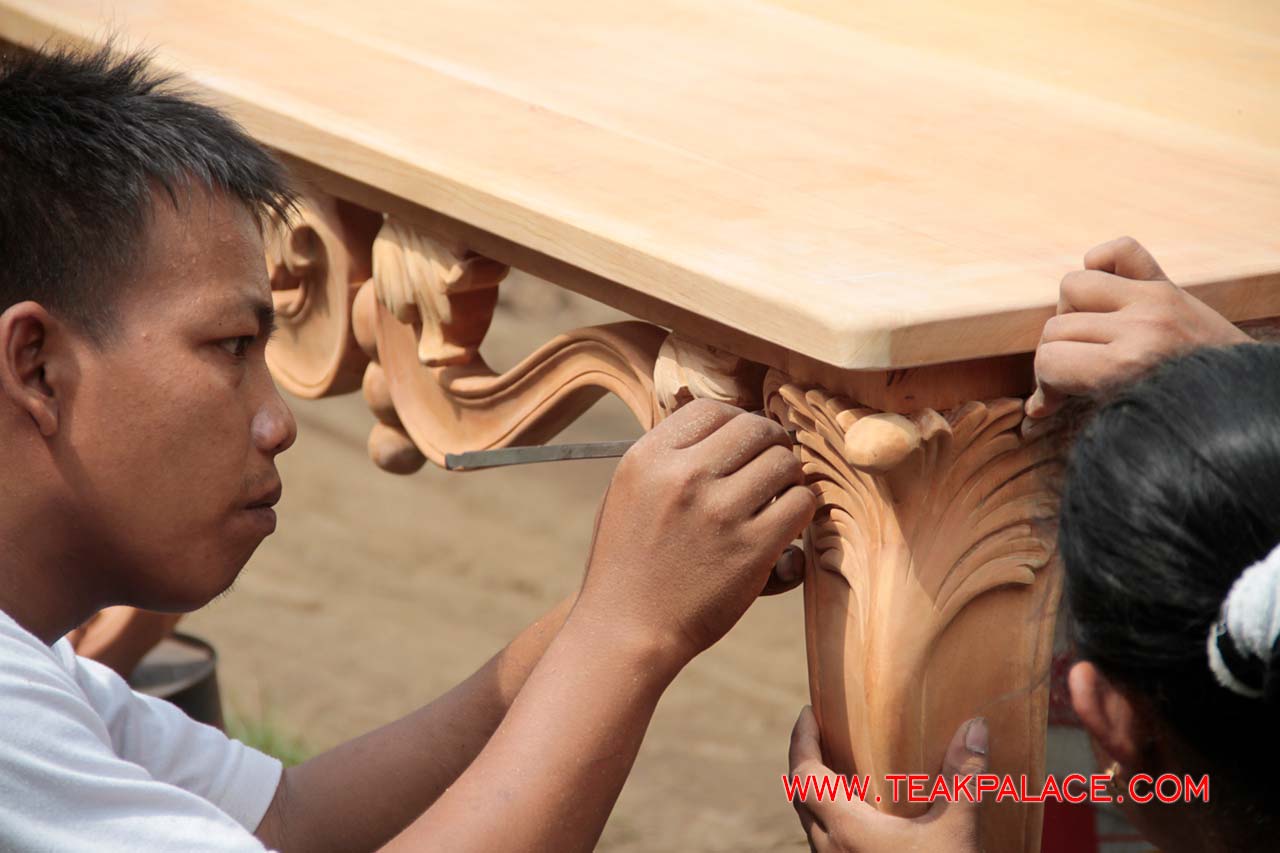
To create good and attractive carving motifs is not easy, craftsmen must have a high artistic spirit. For that, the engraver requires high skill and diligence, not a few people who learn to carve stop in the middle of the road because of the time and process that is long enough to really master. In addition, the creativity of the engraver is also very necessary to create an innovative carving motif.
Source : https://id.wikipedia.org/wiki/Ukiran_Jepara
Related Products


Newest Products